I don't like it when movies look this flawless. I know that sounds like a strange complaint to open with, but that's genuinely the feeling I walked out of Kült Kavaklıdere with after watching Sentimental Value, and I haven't been able to shake it since.
If you know Ankara at all, you know Kült is one of the last places left where going to the movies still feels like something. Worn seats, that particular hush before the lights go down, people who actually showed up because they care about film, not just because there's nothing else to do on a Tuesday. It has soul. It has texture. And then the film itself started, and technically, visually, it was almost the opposite of everything the room around me stood for.
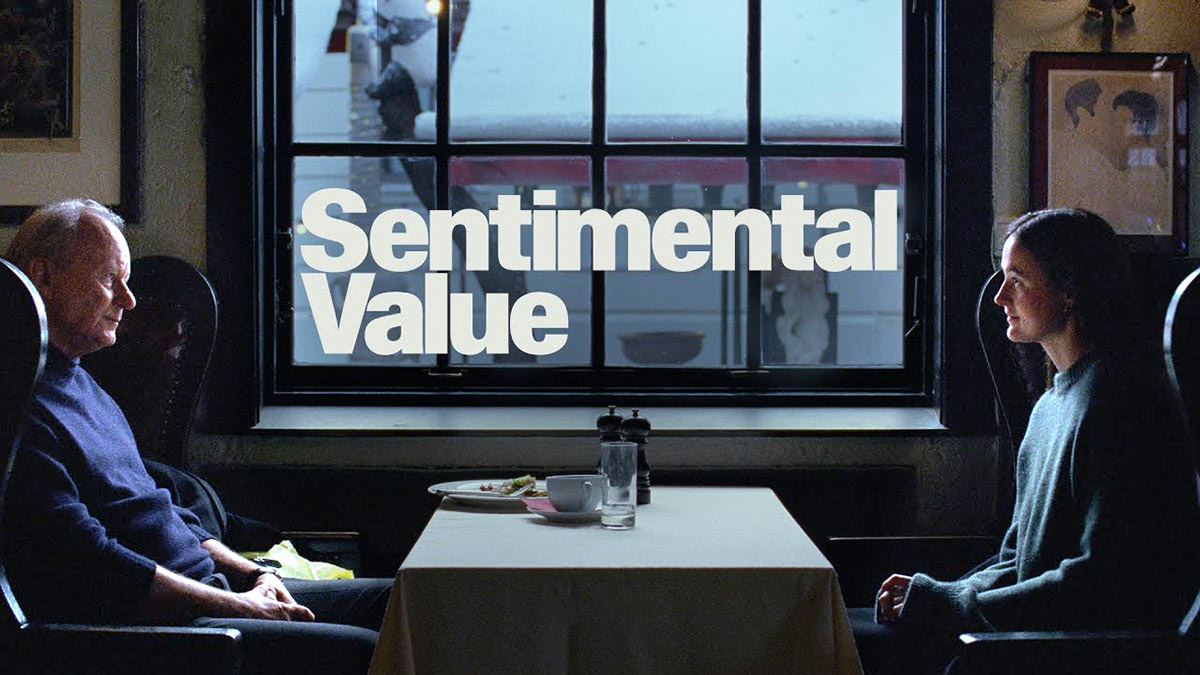
I want to be clear that I'm not talking about competence here. The image is flawless in the most literal sense, and I don't think that's an exaggeration. Every frame is clean, the exposure never wavers, the color grade sits in that tasteful, desaturated-but-not-flat zone that a lot of prestige dramas go for these days. Whatever camera and workflow they used, it's doing exactly what it was built to do. And that's exactly where it lost me. Somewhere between the second and third act I realized I wasn't watching a story anymore, I was watching a demonstration of how good a modern digital sensor and a color grade can look. It was polish for the sake of polish, and instead of pulling me closer, it kept nudging me back. There's a strange kind of coldness that comes out of images this controlled, like the film cared more about being admired frame by frame than about being felt as a whole.
And that's the part that actually gets under my skin, because of the title. Sentimental Value. A film literally named after emotional weight, after the kind of attachment that doesn't care about being tidy or elegant, and yet visually it plays like a tech showcase reel. I don't think that irony was intentional, but once I noticed it I couldn't unsee it for the rest of the runtime. Sentiment isn't clean. Memory isn't clean. The things we actually attach meaning to in real life are scratched, faded, a little off-color, a little inconsistent, and that inconsistency is exactly what makes them feel real. This film gave me none of that. It gave me a surface so smooth I had nothing to hold onto.
I kept waiting for the image to loosen up, for some grain structure to show through, a flicker in the highlights, some small imperfection that would remind me a person made creative decisions here rather than a pipeline optimizing for sharpness and dynamic range. It never really came. Every shot looked like it had been finished in a lab down to the last pixel, and somewhere along the way that precision started working against the story instead of for it. I wasn't being invited into these people's lives so much as I was being shown a very well-lit diagram of them.
Maybe this is just where a lot of contemporary cinema is heading. Digital tools have gotten good enough that "clean" has become the default, almost the safe choice, and I don't think directors always stop to ask whether clean is actually what a given scene needs. There's a reason cinematographers used to fight for grain, for imperfection, for light that misbehaves a little instead of behaving perfectly on cue. That imperfection is what makes an image feel lived-in instead of manufactured. Sentimental Value has the opposite instinct, and for a film built around memory and emotional residue, that choice undercuts itself in a way I don't think the filmmakers intended.
Walking out of Kült afterward, back into a lobby that felt more alive than anything I'd just watched on screen, it hit me how backwards the whole experience was. The building had all the imperfection and warmth the film was missing, and the film had all the polish the building never needed in the first place. Sometimes technical perfection isn't a flex, it's a wall. And this was one of those times where looking too good ended up being the exact thing standing between me and actually feeling something.
6.5/10